

Articles by Andrea Gagliarducci
Pope Francis, ecumenism as a diplomatic tool?
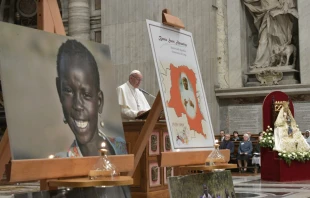
Apr 10, 2019 / 00:00 amPope Francis’ diplomatic way can be understood from the decision to host a spiritual retreat for South Sudan leaders in the Vatican. The spiritual retreat takes place Apr. 10 – 11 and Pope Francis will deliver a speech at the end of that. It was the Archbishop of Canterbury who suggested the idea of the meeting, which Pope Francis welcomed. The Archbishop of Canterbury will take part in the meeting, as well as Rev. John Chalmers, who has been the moderator of the Scottish Presbyterian Church and visited the war-torn country in 2014. Eight members of the South Sudan Council of Churches are taking part in the meeting. According to Alessandro Gisotti, interim director of the Holy See Press Office, this meeting will be “an occasion for encounter and reconciliation, in a spirit of respect and trust, to those who in this moment have the mission and the responsibility to work for a future of peace and prosperity for the South Sudanese people”. Given the presence of so many Christian leaders, it seems that Pope Francis is using ecumenical dialogue as a diplomatic tool. Pope Francis has, in the end, a pragmatic approach, both in diplomacy and in ecumenism. Pope Francis focuses the ecumenical dialogue on practical issues, rather than on theological matters. “Walking, praying and working together” was, in the end, the motto of Pope Francis’ June 2018 trip to Geneva, to meet with the World Council of Churches. It means that the Pope seeks what unites, finding that ecumenical dialogue can be developed only working together on common issues. The common grounds are peace, justice, migration issues, and all the social issues in general. Prayer is instead something that unites all the Christian confessions, and that can also bridge with other religious faiths. This ecumenical commitment must be included in the framework of the deep Holy See commitment for peace. Under Pope Francis, the diplomatic initiatives developed following this path of walking, praying and working together. The first significant Pope Francis’ diplomatic initiative was the day of fasting and prayer for the peace in Syria, and the Middle East summoned on Sep. 8, 2013. Before the meeting, the then Archbishop Dominique Mamberti, in his capacity of Secretary for the Relations with the States (he is now a Cardinal and prefect of the Apostolic Signatura), met the corps of ambassador accredited to the Holy See and gave an overview of the Holy See position about the situation in the Middle East. Pope Francis also promoted prayer for peace in the Middle East in the Vatican Gardens on June 8, 2014. Fr. Pierbattista Pizzaballa, who is now archbishop and administrator of the Latina Patriarchate of Jerusalem, was entrusted of preparing the meeting. The late Israeli president Shimon Peres and the Palestinian leader Mahmoud Abbas were together with Pope Francis in the Vatican Garden. Also, Patriarch Bartholomew, I of Constantinople took part in the prayer. The presence of Patriarch Bartholomew inaugurated a new season. Pope Francis understood that the moments of mutual commitments were also moments to show Christianity united and that a unified Christianity could be a real sign of peace for the world. Pope Francis went to Lesbos on Apr. 16, 2016 and he was accompanied in the journey by Patriarch Bartholomew and with Archbishop Ieronymos II of Athens. The meeting had the scope to shed light on the refugees' crisis, but it was also an occasion to strengthen ecumenical ties based on a common interest. Pope Francis trip to Lund, Sweden, on Oct. 31, 2016, was also the occasion for an ecumenical commitment. During that trip, Caritas Internationalis and the World Service of the Lutheran World Federation signed a declaration of intents to promote a partnership between the two organizations. Last Apr. 4, Caritas Internationalis and World Service reaffirmed their commitment and discussed leveraging joint networks. There was another day of prayer of peace, celebrated on Nov. 23, 2017. The event was dedicated to praying for peace in South Sudan and the Congo Democratic Republic. Unlike the 2013 event, this day of prayer was not preceded by a meeting with diplomatic corps. The spiritual retreat for South Sudan is also a way to pursue this ecumenical strategy to achieve peace. The Holy See has set aside the diplomatic efforts, though Archbishop Paul Richard Gallagher, Vatican “minister for Foreign Affairs,” was in South Sudan from March 21 to March 25. He met with local authorities, encouraged the peace process, listened to the concerns of the bishops and informally tried to understand if there are conditions for a Pope Francis’ trip in the country. Months before, the Holy See had established a residential office in South Sudan, an office of the nunciature led by Monsignor Mark Kadima, that is residential chargée d’affairs in the country. The retreat in the Vatican is something new. However, the Catholic Church has already a long tradition to put people together on the same table and to heal the wounds of conflict: the Commissions for Truth and Reconciliation, that have been very much successful in many countries, like South Africa and Colombia. The retreat is however just a first step. Pope Francis is still longing to visit South Sudan. He will undoubtedly do when things are settled. The dialogue promoted in the Vatican can make the conditions favorable for a trip.
Vatican-China deal must be implemented, Parolin says
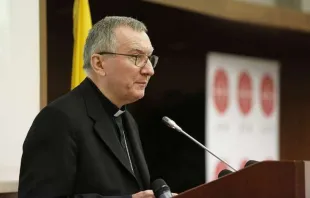
Mar 1, 2019 / 23:49 pmSpeaking at a conference on Vatican diplomacy, the Holy See’s Secretary of State stressed that it is now important “to make the China deal for the appointment of bishops work in practice.”
Review: Not much substance 'In the Closet of the Vatican'
Feb 21, 2019 / 04:00 am“In the closet of the Vatican,” a newly released book by the French author and LGBT activist Frederic Martel is generating global media attention and discussion among Vatican figures in Rome.
Analysis: Pope Francis' position on Venezuela
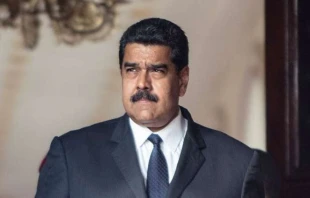
Feb 16, 2019 / 23:00 pmPope Francis’ recent letter to Venezuela’s Nicolas Maduro confirmed the Holy See’s position on the Venezuelan crisis, while demonstrating that Maduro has become an increasingly isolated global figure.
Vatican's Office of General Auditor gets new statutes
Feb 12, 2019 / 00:00 amThe Vatican's general auditor has new statutes, conferred recently by Pope Francis, that will bring financial audits of Vatican offices into greater conformity with United Nations agreements.
Papal visit to UAE is a ‘breakthrough,’ says EU envoy
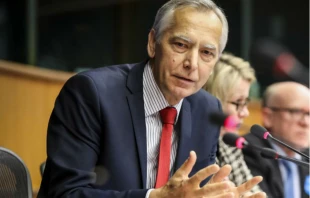
Feb 1, 2019 / 12:00 pmJan Figel, the EU special envoy for the promotion of religious freedom, spoke to CNA and said that Pope Francis’ upcoming trip will “deepen the ongoing dialogue and sense of responsibility to the representatives and people of the second major religion.”
How the Vatican summit's moderator approaches the problem of clerical sexual abuse
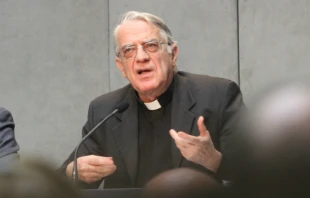
Jan 22, 2019 / 12:00 pmThe moderator of the Vatican’s February summit on child sexual abuse has written an article outlining his take on the Church’s most effective models of response for addressing its sexual abuse crisis.

Order of Malta to provide first aid at World Youth Day
Jan 22, 2019 / 09:32 amThere will be 120 volunteers of the Order of Malta in Panama for World Youth Day, with the task of “providing first aid to young pilgrims”, Prince Dominique de La Rochefoucauld-Monbel, Grand Hospitalier of the Order, told CNA.
What is happening with the Sistine Chapel Choir?
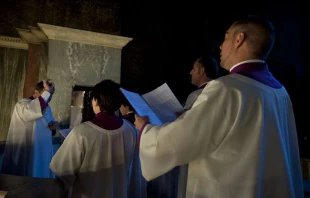
Jan 21, 2019 / 16:45 pmWith a motu proprio released Jan. 19, Pope Francis put the Sistine Chapel Choir under the administration of the Office of Pontifical Liturgical Celebrations, appointing Mons. Guido Marini, who is the master of ceremonies for papal liturgies, to the helm, and entrusting him with drafting the choir’s new statutes.
Pope Francis: What to expect in 2019
Jan 15, 2019 / 14:00 pmThe finalization of a Curial reform process, a reshuffle in some Vatican positions, and an eventual consistory to “refill” the College of Cardinals might be among Pope Francis’ key moves in 2019.
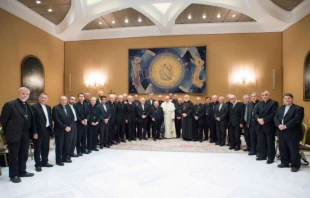
Pope Francis meets with Chilean bishops to discuss abuse crisis
Jan 14, 2019 / 18:00 pmPope Francis met for three hours Monday with leaders of the Chilean bishops’ conference, as the bishops face a sexual abuse crisis and plan initiatives to strengthen the Church in the country.

How 'Pope for Ukraine' aims to help displaced families
Jan 3, 2019 / 20:00 pm“Pope for Ukraine” is a Vatican initiative that aims to collaborate with non-Catholic entities to respond to the emergency humanitarian situation amid conflict in eastern Ukraine.
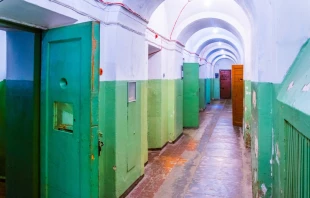
Meet the Jesuit who survived the KGB
Dec 26, 2018 / 10:10 amWhen Pope Francis visited a former KGB building in Vilnius, Lithuania Sept. 23, Archbishop Sigitas Tamkevicius was the only bishop to accompany him. More than 2,000 people were executed there, and 300 hundred priests were held prisoner - including Tamkevicius.
Analysis: How the Vatican is preparing for its February abuse summit
Dec 19, 2018 / 12:00 pmPreparations in the Vatican are underway for a summit of the bishops to discuss the problem of clerical sexual abuse. The meeting, which will involve the leadership of bishops’ conferences from around the world, seems to follow Pope Francis’ methodology for addressing abuse by clerics.
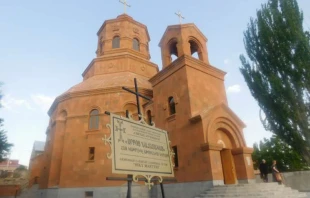
Armenian Apostolic Church appoints first-ever representative in Rome
Dec 19, 2018 / 10:07 amThe Armenian Apostolic Church, one of six in the Oriental Orthodox communion, will have a fixed representative in Rome, similar to the Eastern Orthodox, Anglicans, and Methodists.
EU recognizes financial system of Vatican City State
Dec 2, 2018 / 22:05 pmThe Board of the European Payments Council (EPC) approved last month the extension of the geographical scope of the Single Euro Payments Area (SEPA) to include Vatican City State and the Holy See. Mostly seen as insider news, the decision in fact bespeaks a considerable boost to the financial system of the Vatican.
Analysis: What is next for Curial reform?
Nov 28, 2018 / 20:00 pmThe next gathering of the Council of Cardinals, also known as the C9, will take place Dec. 10-12. It will likely be the last meeting of the council as it is presently constituted.

Pope Francis will travel to Romania in 2019
Nov 20, 2018 / 19:00 pmPope Francis will visit Romania in 2019, according to Archbishop Ioan Robu of Bucharest, president of the Romanian bishops’ conference.
Pope creates class on ‘Sciences of Peace’ at Lateran University
Nov 17, 2018 / 04:01 amPope Francis Monday established a curriculum in Sciences of Peace at the Pontifical Lateran University, involving the “pope’s university” because of the special bond it has with the Holy See in a project to “foster seeds of peace.”
Italian bishops’ conference establishes national center for youth protection
Nov 17, 2018 / 00:00 amWith the intention of “providing a radical solution” to the sex abuse issue, the Italian bishops’ conference established Thursday a new center for youth protection, and pledged to update its 2014 guidelines on countering sexual abuse.